

Why Hinged Wardrobe Doors Still Make Sense in Some Rooms
Sliding wardrobes get a lot of attention, and for good reason. They save space and work well in many layouts. Still, hinged wardrobe doors have not disappeared, and that’s not by accident. In certain rooms, they work better. Sometimes much better.
This is not about which option looks newer or more modern. It’s about how a wardrobe is used day to day, how the room is laid out, and how much access you actually need. Hinged wardrobe doors solve problems that sliding doors cannot always deal with.
Full Access Is the Main Advantage
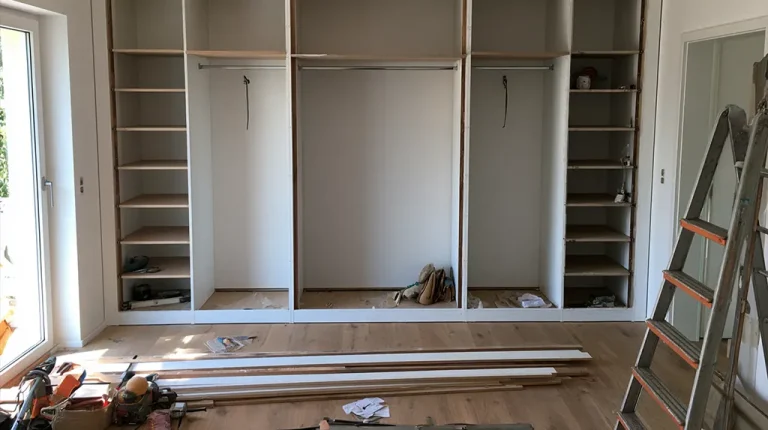
The biggest difference is access. Hinged wardrobe doors open fully. When the doors are open, everything inside the wardrobe is visible and reachable. Shelves, drawers, hanging rails, and corners are all easy to get to at the same time.
With sliding systems, one section is always covered. That works fine for some people, but it can feel limiting in wider wardrobes or shared spaces. Hinged wardrobe doors avoid that issue entirely.
This matters more than people expect. In daily use, being able to see the full contents of the wardrobe makes organisation easier. It also reduces clutter, because nothing stays hidden behind another door.
For rooms where space in front of the wardrobe is not tight, hinged doors often feel more natural.
When Hinged Doors Work Better Than Sliding
Hinged wardrobe doors work best when the room layout allows clear door swing. That usually means bedrooms with enough floor space, walk-in wardrobes, or rooms where the bed or furniture does not sit close to the wardrobe line.
They are also a good choice in older houses, where walls and floors are rarely perfect. Hinged systems are more forgiving of small irregularities. Each door can be adjusted independently, which helps keep gaps even and movement smooth.
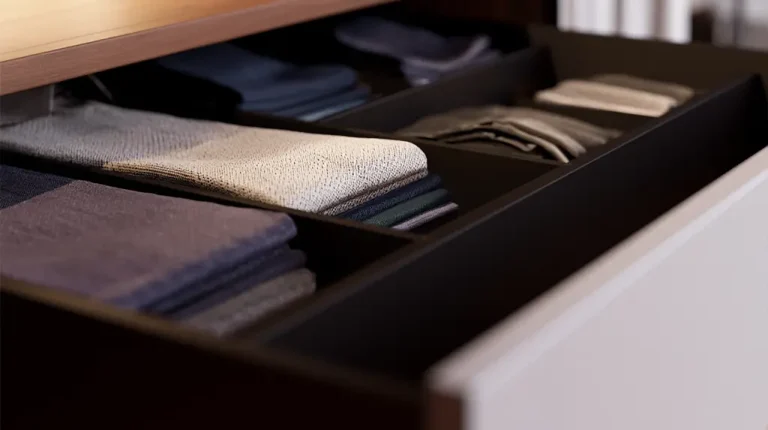
Another situation where hinged doors work well is when wardrobes include a lot of internal drawers. Drawers behind sliding doors can only be accessed one section at a time. With hinged doors, drawers open freely without planning around door overlap.
There is also the question of mirrors. Hinged mirrored wardrobe doors allow full mirror access without sliding panels back and forth. In some rooms, that makes everyday use easier.
Made-to-Measure Hinged Mirrored Wardrobe Doors
Made to measure hinged mirrored wardrobe doors are often chosen where both access and reflection matter. Because the doors are custom-sized, the mirror panels line up cleanly with the rest of the room. There is no overlap and no broken reflection across sliding panels.
This works particularly well in dressing areas and main bedrooms. A full-height mirror on a hinged door gives a clear view without needing extra wall space. When the door opens, the mirror moves with it, rather than being split across tracks.
Custom sizing also helps with awkward ceiling heights or uneven walls. Each door is built to fit its opening, rather than being part of a fixed sliding system. That flexibility makes installation cleaner in spaces that are not perfectly square.
Hinged mirrored wardrobe doors also tend to feel lighter in use. There is less resistance than sliding doors, especially on wider openings.
Direct Hinged Doors and Long-Term Reliability
Hinged wardrobe doors, direct from the frame, have fewer moving parts than sliding systems. There are hinges, fixings, and door panels. That’s it. Fewer components usually mean fewer long-term issues.
Sliding systems rely on rollers, tracks, and precise alignment across a wide span. Hinged systems spread the load across multiple hinges. If one hinge needs adjustment, it can be done without affecting the rest of the wardrobe.
This is why hinged wardrobe doors are often chosen for long-term reliability. They are easier to maintain and simpler to adjust over time. In rooms where the floor may move slightly, hinged doors cope better.
Noise is another factor. Hinged doors, when fitted correctly, stay quiet. Sliding doors can develop rattles or scrapes as rollers wear. Hinged systems avoid that problem entirely.
Things to Consider Before Choosing Hinged Doors
Hinged wardrobe doors are not the right choice for every room. Door swing needs to be planned carefully. If the room is narrow or furniture sits too close, opening the doors can feel awkward.
It’s also important to think about the handle position and door width. Very wide hinged doors can feel heavy, so splitting the opening into more panels often works better.
Mirrored doors need careful placement to avoid strong reflections facing the bed or windows. This is a layout decision, not a problem with the doors themselves.
One simple question helps with the decision:
Do you want full access all the time, or is partial access enough?
The answer usually points clearly towards hinged or sliding. In any case, if you’re ready to transform your space, let’s get started.