
Wardrobe Ideas for Attic Bedrooms: How to Use Low Ceiling Space Properly
Attic bedrooms always come with the same problem. There is plenty of floor space, but not enough usable height. The slope of the ceiling limits what you can do, and this is where most wardrobe ideas fall apart.
People often focus on the tallest part of the room and ignore the rest. That usually leads to wasted space and awkward layouts. The key is to treat the attic as a set of zones, not one open area.
Once you understand what fits where, the layout becomes much easier to plan.
Why Low Ceiling Areas Are Often Wasted
The lowest part of an attic is usually pushed aside. It feels too tight to use, so it ends up empty or filled with random items. That space is more useful than it looks, but only if it’s used correctly.
The mistake is trying to use it like a standard wardrobe. Full-height doors and deep hanging space don’t work there. The ceiling gets in the way, and access becomes awkward. This is where most “wardrobe ideas for attic bedrooms” go wrong. They try to force standard furniture into a non-standard space.
Low areas are not for standing storage, but for controlled, low-access storage.
What Actually Works Under a Sloped Ceiling
This is the part that makes or breaks an attic wardrobe.
Instead of thinking in terms of full wardrobes, it helps to break the space into layers based on height. Each layer has a job. Trying to make one solution fit everything usually leads to poor access and wasted depth.
The lowest section works best for items that don’t need height. That includes:
- folded clothes
- bedding
- storage boxes
- shoes
- seasonal items
Drawers or pull-out boxes are usually the most practical here. Reaching into deep, low shelves is uncomfortable. Pull-out solutions bring everything forward and make the space usable.
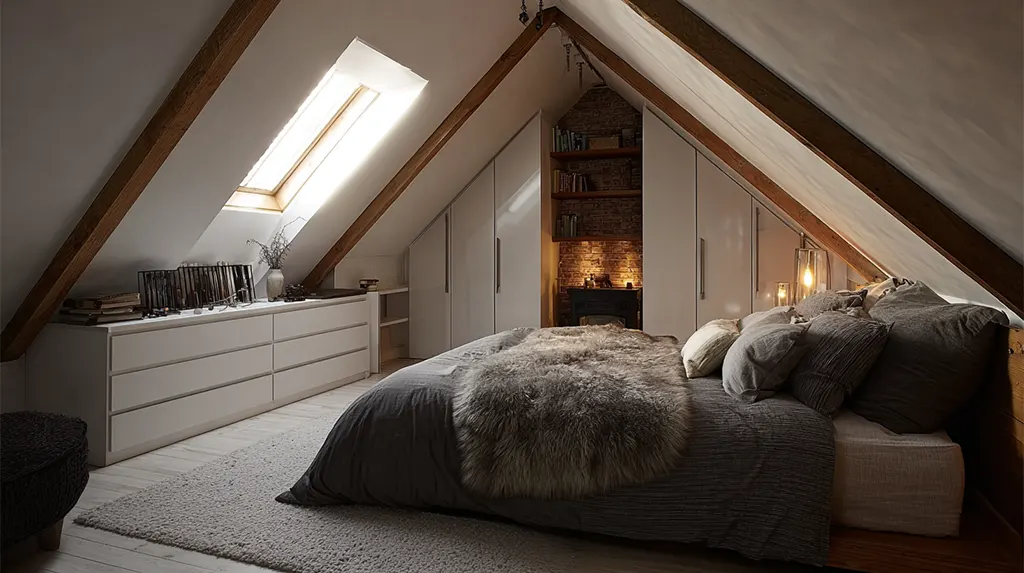
The mid-height zone is the most valuable part of the attic. This is where you can sit or bend comfortably, and it’s where daily-use storage should go. Shelves, short hanging rails, and compartments all work well here. This area should carry the bulk of your wardrobe use.
The tallest section should be used carefully. It’s tempting to place everything here, but that often leads to crowding. Long hanging space works here, along with items that need full height. Keeping this area organised prevents the rest of the wardrobe from becoming overloaded.
Depth also matters more than people expect. Deep storage under a slope quickly becomes unusable at the back. Keeping units shallower often improves access and makes the space feel more open. A slightly smaller wardrobe that you can fully use is better than a deep one that hides half your items.
One simple question helps guide the layout.
Can you reach the back of this space without forcing yourself into it?
If the answer is no, the design needs adjusting.
Combining Different Storage Types in One Run
Attic wardrobes work best when they are mixed, not uniform. Instead of repeating the same unit across the whole wall, it’s better to adapt each section to the ceiling height. That might mean drawers in one part, shelving in another, and hanging space only where the height allows it. This creates a layout that follows the shape of the room rather than fighting it.
Sliding wardrobes can work in attics, but only in the right zones. They need consistent height and depth to function properly. In lower sections, hinged doors or open storage are often easier to use. The choice should follow the shape of the ceiling, not preference alone.
Keeping the design flexible also helps. Attic spaces often feel different once they are in use. A layout that allows small changes over time will last longer.
Making the Most of the Space You Already Have
Attic bedrooms don’t need more space. They need to make better use of the space that already exists.
Low ceilings are not a limitation if they are planned properly. They simply require a different approach. When storage follows the height of the room, everything becomes easier to access and easier to maintain.
Most problems come from trying to treat the attic like a standard bedroom. Once you stop doing that, the layout starts to make sense.
If you’re ready to transform your space, let’s get started.