
Wardrobe depth sounds simple. Most people assume there is a standard size, usually around 60 cm, and that’s the end of it. In reality, depth is one of the most misunderstood parts of wardrobe design. A wardrobe can be the “right” depth on paper and still feel awkward in daily use. Clothes get crushed, doors limit access, and space at the back becomes useless. This happens because total depth and usable depth are not the same thing.
So how deep should a wardrobe actually be?
What “Standard Wardrobe Depth” Really Means
The commonly quoted standard wardrobe depth is around 55–60 cm. This comes from the space needed to hang clothes on a rail without them touching the back panel. A typical hanger with clothes needs around 45–50 cm, plus extra space so fabric doesn’t press against the back, and enough clearance at the front so doors can close properly.
That is how the “standard” number is formed. It works reasonably well for simple, hinged wardrobes with no internal complications. Once you introduce sliding doors, thicker fronts, or internal fittings, that number becomes less reliable and often misleading.
Why Wardrobe Depth Often Goes Wrong
Most problems come from planning wardrobes based on external depth rather than usable space inside. The difference can be significant, especially with sliding systems, where part of the depth is taken up by tracks and door overlap.
Several elements reduce usable depth:
- sliding door tracks can take 8–10 cm
- back panels reduce internal space
- door thickness pushes the usable area further back
- internal fittings need their own clearance
A wardrobe that measures 60 cm externally may only provide around 50 cm of usable depth. That is already tight for hanging clothes. This is why garments sit at an angle, sleeves get pressed, or doors catch fabric.
Problems also appear when wardrobes are too deep. Extra depth at the back quickly becomes difficult to access, especially in low-light or awkward spaces. Items get pushed back and forgotten. This is common in attic wardrobes, where depth increases but usable height decreases.
One simple question helps guide decisions here:
Can you reach and use the full depth without effort?
If not, part of that space is already wasted.
Choosing the Right Depth for Different Setups
There isn’t a single correct depth. It depends on how the wardrobe is used and what it needs to store. For hanging clothes, enough space is needed for hangers and movement. This is where the standard 55–60 cm still works, but only if that space is fully usable inside the wardrobe.
Sliding wardrobes usually require more depth to compensate for the track system. In practice, a total depth closer to 65–70 cm tends to work better. Without that, internal space becomes restricted and less practical.
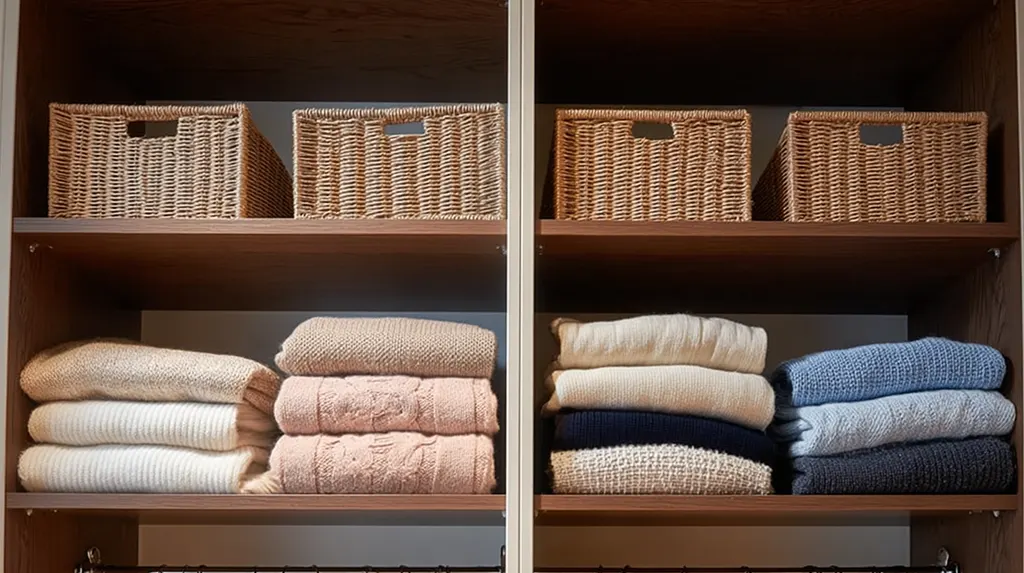
For shelves and folded items, depth can be much smaller. Around 35–45 cm is often enough. Anything deeper makes items harder to see and reach. In attic rooms or low ceiling areas, shallower wardrobes are often the better choice, as deep units under a slope quickly become impractical.
In many cases, combining different depths within one wardrobe run gives the best result. Deeper sections can be used for hanging clothes, while shallower sections handle shelving or low-height storage. Keeping everything at one depth often leads to compromise.
How to Check Depth Before You Commit
Depth should always be tested against real use, not just measurements on paper. A few simple checks can prevent most problems.
- measure a hanger with a coat or jacket
- allow space between clothes and the back panel
- consider how much depth doors will take
- check how far you can comfortably reach
- plan based on what you will store, not just capacity
Installers often use a simple method. They simulate the depth using a tape measure or a straight edge and place a hanger inside that space. This quickly shows whether clothes will sit properly or feel cramped. Small differences at this stage can change how the wardrobe feels every day.
Getting Depth Right From the Start
Wardrobe depth is not about following a standard number. It is about making sure the space works in practice. Too shallow, and clothes do not sit properly. Too deep, and part of the space becomes difficult to use.
Most issues come from ignoring how doors, fittings, and room shape affect usable depth. Once the wardrobe is installed, changing this is not easy. Getting it right at the start avoids long-term frustration.
A well-sized wardrobe feels natural to use. Everything fits, everything is visible, and nothing is pushed out of reach. That is what good depth planning achieves.
If you’re ready to transform your space, let’s get started.