
A wardrobe goes in against an external wall, everything looks fine, and a year later there’s a musty smell in the room. Clothes at the back feel slightly damp. Take the back panel off and there it is: black spotting on the wall, sometimes on the unit itself.
This is one of the most common problems with fitted furniture in Irish homes, and it’s almost never caused by the furniture. It’s caused by where the furniture sits and what happens to the air behind it.
Why It Happens
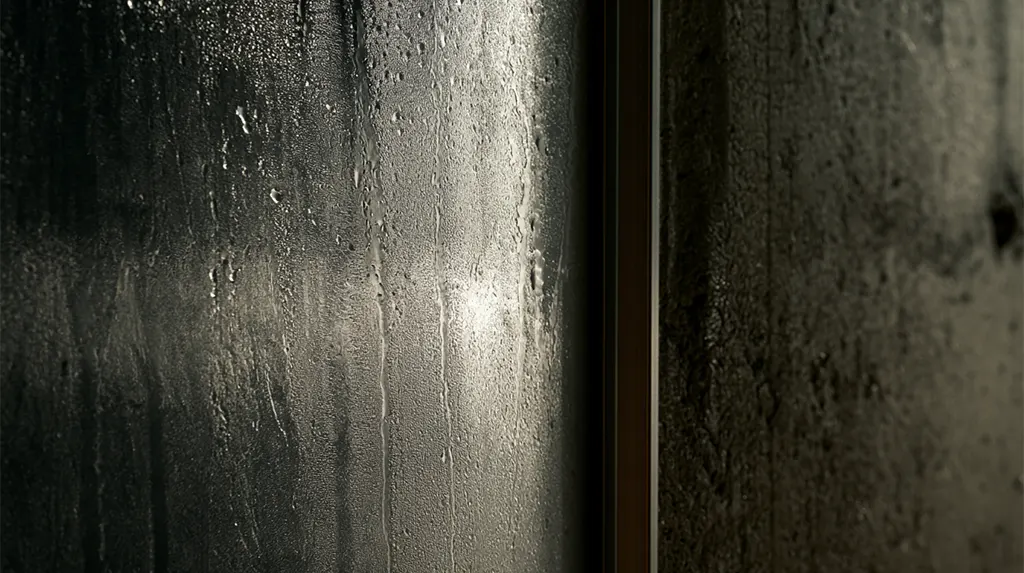
Warm air holds more moisture than cold air. When warm, moist air meets a cold surface, the moisture turns back into water on that surface. Every room has a coldest surface, and that’s where it appears first. In most bedrooms, that’s an external wall.
Put a wardrobe tight against that wall and two things happen at once. The wall behind it gets colder, because heat from the room can no longer reach it. And the air behind it stops moving, so any moisture that gets back there has no way of drying out.
North-facing walls are worst affected because they get the least sun. Corners are also vulnerable, since two external walls meeting create a colder spot than either wall alone.
Where the Moisture Comes From
The moisture is ordinary household moisture. Nobody needs a leak for this to happen.
- Breathing and sleeping. Two people in a bedroom overnight release a significant amount of water vapour.
- Drying clothes indoors. A single load on a rack releases litres of water into the air. In a bedroom with a wardrobe on an external wall, this is the fastest route to a damp problem.
- Showers. Steam travels, particularly if the bathroom door is left open or the extractor fan is weak.
- Clothes put away slightly damp. Anything not fully dry adds moisture straight into a closed space with no airflow.
Older homes with solid walls and no cavity insulation are the most affected, because the wall surface stays much colder. It happens in newer homes too, especially where heating comes on in short bursts and the building never fully warms up.
What Prevents It
This is a design problem with straightforward solutions, and nearly all of them have to be dealt with before the wardrobe is built.
- Leave an air gap. Fitting the carcass on battens so it stands off the wall lets air move behind it. Even 20mm to 25mm makes a real difference.
- Ventilate the unit. Discreet vents in the plinth, top rail, or back panel let air circulate through the wardrobe instead of sitting still inside it.
- Insulate the wall first. On a known cold wall, insulated plasterboard applied before installation raises the surface temperature and removes the cold spot entirely. This is the most effective fix available.
- Choose the wall carefully. Where the room allows a choice, an internal wall avoids the problem completely. It isn’t always possible, but it’s worth asking at the planning stage.
If the Wardrobe Is Already In
Heat the room steadily rather than in bursts. A room that warms and cools repeatedly gives condensation more chances to form than one held at a consistent low temperature.
Ventilate daily, even briefly. Opening a window for a few minutes each morning removes a surprising amount of moisture-heavy air, and trickle vents should be left open rather than closed.
Avoid drying clothes in the room, and don’t overfill the wardrobe, because tightly packed clothing stops air moving through it.
The Point Worth Remembering
Damp behind a wardrobe looks like a furniture fault and gets blamed as one. It’s really a combination of a cold wall, still air, and everyday moisture, and it’s entirely predictable once you know what to look for.
Any wardrobe going onto an external wall should be planned with that in mind. An air gap, some ventilation, and an honest look at how cold the wall gets will prevent almost every case of it. Small details on a drawing, and very difficult to add later.
If you’re ready to transform your space, let’s get started.