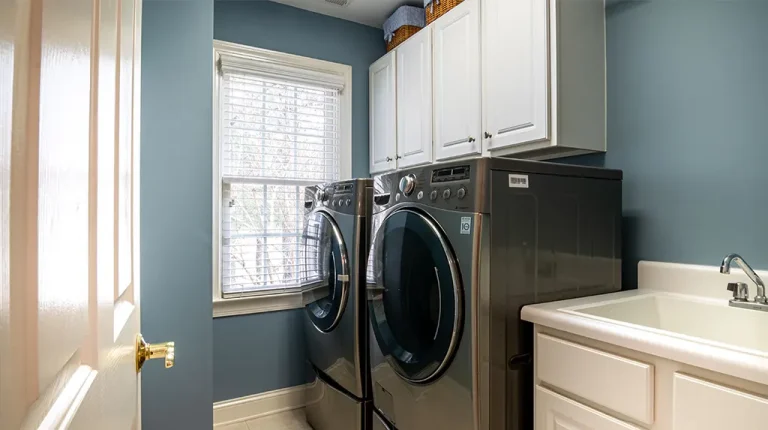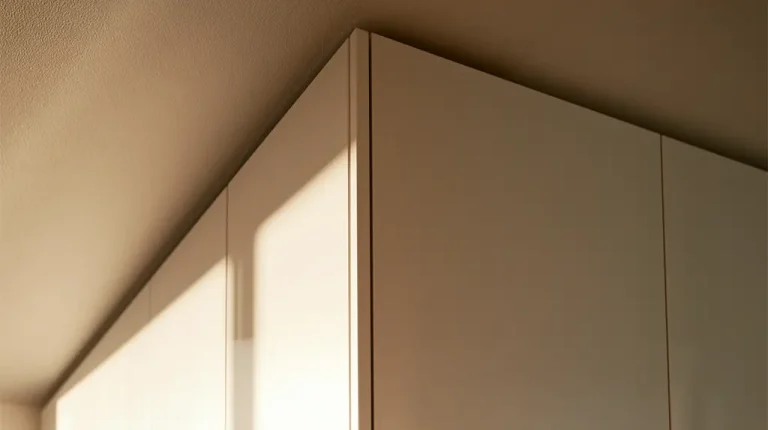

Two wardrobes can look identical on the day they’re installed. Same finish, same handles, same clean lines. The difference shows up somewhere between year three and year ten, and it has almost nothing to do with the parts you can see.
Longevity comes from the carcass, the hardware, and the edges. All three are hidden once the doors are closed.
The Carcass
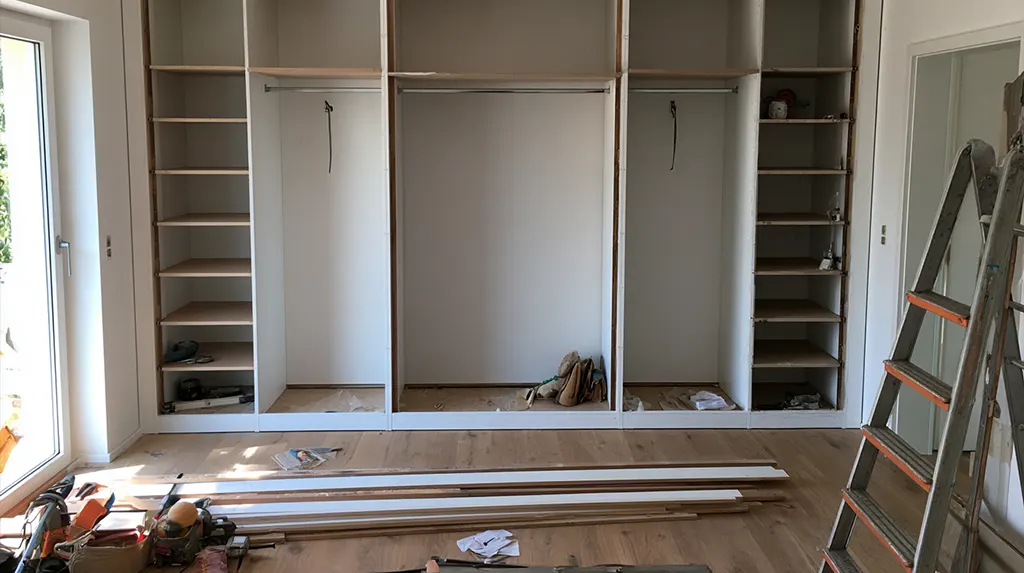
The carcass is the structural box of the unit: the sides, top, bottom, back, and fixed shelves. It carries the weight, holds the unit square, and provides the fixing points for every hinge, runner, and rail.
Most carcasses are made from chipboard with a melamine face, and good quality chipboard at the right thickness performs well. Thickness is the thing to check. Eighteen millimetres is a reasonable standard. Fifteen is noticeably weaker over long spans, and it holds screws less securely, which matters wherever hardware is fixed into it.
Shelf spans matter for the same reason. A long unsupported shelf in thin board will bow under weight, and once it has bowed it doesn’t recover. Shorter spans or a mid-support solve it at the design stage.
Hardware Is What Fails First
In practice, hardware is almost always the first thing to go. Drawer runners start to drag. Doors stop closing flush. A rail begins to sag under weight.
Good hardware is rated for tens of thousands of open and close cycles, which is what daily use over twenty years actually amounts to. Cheap hardware isn’t, and it’s used in exactly the same wardrobe design.
Two other things matter as much as the rating:
- Adjustability. Quality hinges adjust in three directions. When a door drifts slightly out of line, it can be brought back rather than lived with.
- Replaceability. Recognised brands of hinge and runner can be replaced individually years later. Unbranded hardware often can’t be matched, which turns a small repair into a rebuild.
Edges and Fixings
Edge banding is the thin strip covering the cut edge of a board. It looks cosmetic. It isn’t.
Exposed or poorly bonded chipboard absorbs moisture, swells, and never returns to shape. Bathrooms and kitchens are the obvious risk, but any wardrobe on a cold external wall is exposed to the same problem. Properly bonded banding on every cut edge is one of the clearest signs of a well-made unit.
How the carcass is joined matters too. Units assembled with glued and dowelled joints, or properly screwed construction with a rebated back panel, resist racking far better than a box held together with cam locks and a thin stapled-on back.
Where Cheap Furniture Fails, In Order
Failure tends to follow a predictable sequence:
- Drawer runners begin to drag or drop at full extension
- Hinges lose adjustment and doors sit unevenly
- Edge banding lifts and the board beneath starts to swell
- Shelves bow under load
- The back panel loosens and the unit begins to twist out of square
The early stages are annoying. The later ones are structural, and by then repair usually costs more than it’s worth.
What’s Worth Paying For
If a budget has to go somewhere, it goes into the parts nobody sees. Carcass thickness, hardware brand, and edge banding quality determine whether a wardrobe is still working properly in twenty years.
Doors and finishes are what you notice first, but they’re also the easiest thing to change later. The box behind them is not.
If you’re ready to transform your space, let’s get started.