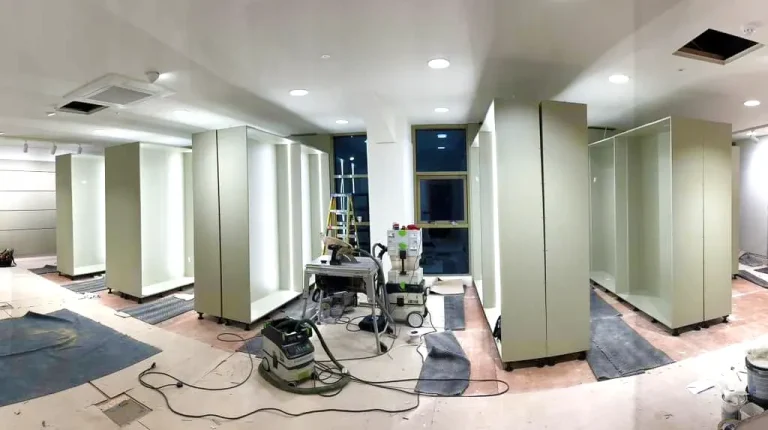


Wardrobes take up more space than we realise. Even a slim one eats into the room’s flow. Add in drawers, lockers and shelving, and suddenly your bedroom starts to feel like storage, not somewhere to relax.
So what if you moved the wardrobe out altogether?
Some homeowners in Ireland are starting to do exactly that. With the right setup, attic wardrobes can solve more than just sloped-ceiling headaches. They can give you back your bedroom.
But is it a good idea for your home?
Why It’s Worth Considering
Attics are often the most underused space in the house. They collect boxes, seasonal bits, maybe the odd gym mat. But in many homes, the space is dry, floored, and lit — it just hasn’t been given a proper job.
Moving wardrobe storage upstairs can be a smart way to take the pressure off bedrooms. This is especially true in semi-detached homes where bedrooms are tight or shared between family members.
What do you gain?
- More usable floor space in the bedroom
- Room for a desk, a reading chair, or a better bed position
- Less clutter, especially if you’re keeping most clothes in one place
- A separate, walk-in-like space for getting ready
Some people turn their attic wardrobes into full dressing areas. Others use them to store out-of-season clothing, formalwear, or bulky items that don’t need to be accessed daily. Either way, it can free up a lot of space downstairs.
But it only works if the attic storage is properly designed.
What Makes Attic Wardrobes Work (Or Fail)
The idea sounds good. But if the storage upstairs is awkward to use, you’ll stop using it.
There are three things that make attic wardrobes work:
1. Access has to be easy
If your attic has a proper staircase and landing, great. If not, and it’s still only accessible via a hatch and ladder, it’s not a viable everyday option. Occasional use is fine — but don’t expect it to be your primary wardrobe if it’s difficult to reach.
2. The space must be dry and properly ventilated
Clothes don’t like moisture or dust. Attics in older homes can have condensation problems or poor airflow. If the attic hasn’t been dry-lined or doesn’t have consistent ventilation, wardrobe fittings and fabrics can be damaged over time.
3. The furniture needs to fit the shape
Attics aren’t rectangles. Every slope, beam, and knee wall limits what can be installed. That’s why flat-pack solutions rarely work. A custom layout with measured internals is usually the only way to get real storage out of the space.
The goal is to make sure the attic storage feels just as easy to use as a normal wardrobe. Otherwise, it ends up as a dumping zone ,and you’re back to square one.
Smart Layout Ideas for Real Homes
When attic wardrobes are done right, they can be surprisingly functional. But the layout has to match how you’ll use the space.
In one Cork home, a couple converted their attic into a shared dressing room. They kept their bedroom simple — just the bed, lockers, and a mirror. The attic was fitted with shallow-depth wardrobes on both sides of the central walkway, full-height mirrors at each end, and LED strip lighting under each rail. The setup gave them more storage than two standard wardrobes combined, without crowding their living space.
Another client used their attic to store out-of-season clothing and formalwear. The attic wasn’t converted — just floored and dry-lined, with basic lighting and a fold-out stairs. We installed two angled wardrobe units with soft-close drawers and breathable storage for winter coats. It wasn’t a space they used daily, but it kept the bedroom wardrobes light and easy to manage.
There are other small layout tricks that help:
- Hanging rails that slide out rather than run across long widths
- Open shelving units under the slope for shoes or folded knitwear
- Overhead storage above the standing line for suitcases or boxed items
- Motion-sensor lighting so you’re not fumbling with switches
These aren’t luxury builds. They’re designed to match how people actually use their homes.
When It’s Not the Right Fit
Sometimes, attic wardrobes don’t make sense — or won’t solve the problem you think they will.
If your home doesn’t have proper attic stairs, or if head height is extremely limited, it may not be worth the effort. Even with fitted internals, you still need enough space to stand, move, and change clothes comfortably.
Also, consider who the wardrobe is for. If the attic is being used by children or older adults, regular access could become an issue. And if insulation or ventilation hasn’t been properly installed, clothes can develop musty smells or discolouration over time.
Lastly, cost matters. A basic attic floor with custom wardrobes will still be far more cost-effective than a full conversion, but you’ll need to budget for:
- Flooring and structural checks
- Wall lining or panelling
- Lighting and possibly sockets
- Wardrobe internals and doors
- Installer time for working with irregular angles
That said, it’s still often cheaper — and less disruptive — than trying to rework an entire bedroom layout downstairs.
Putting the Room Back Into Your Room
Most people don’t need more house. They just need their existing rooms to work better.
If your bedroom feels like it’s doing too much, moving some of that pressure into the attic can be a simple, clean fix. A well-designed attic wardrobe won’t just store things. It’ll give you breathing room back where you need it most.
Whether it’s a full dressing zone or a secondary storage space, the attic’s potential is often ignored. But it’s there — above your head-ready to do more than just collect boxes.
Ready to transform your space? Let’s get started.