
Most wardrobes are planned around what you wear every day. But what about the things you only need half the year?
Winter coats. Holiday clothes. Heavy shoes. Spare duvets. These take up space when they’re not in use. If your fitted wardrobe is crammed year-round, it’s probably not a size issue — it’s a layout one.
What’s the solution? Build the switch into the design from the start.
One Wardrobe, Two Seasons
A well-fitted sliding wardrobe should work in every season. That means it can hold what you need now, while keeping the rest out of the way — no attic boxes or garage storage needed.
We usually break this down into two zones:
- Primary zone: what you use daily. Easy to reach, always visible.
- Secondary zone: what you don’t need now. Slightly higher, lower, or deeper.
The best time to design for this is before your wardrobe is built. But it’s still possible to retrofit an existing layout with a few small adjustments.
Slide storage helps with this, too. Because doors don’t swing, you can access one section at a time, making it easier to assign seasonal areas.
Design Features That Make Switching Easy
Here’s what makes a wardrobe easy to switch between seasons:
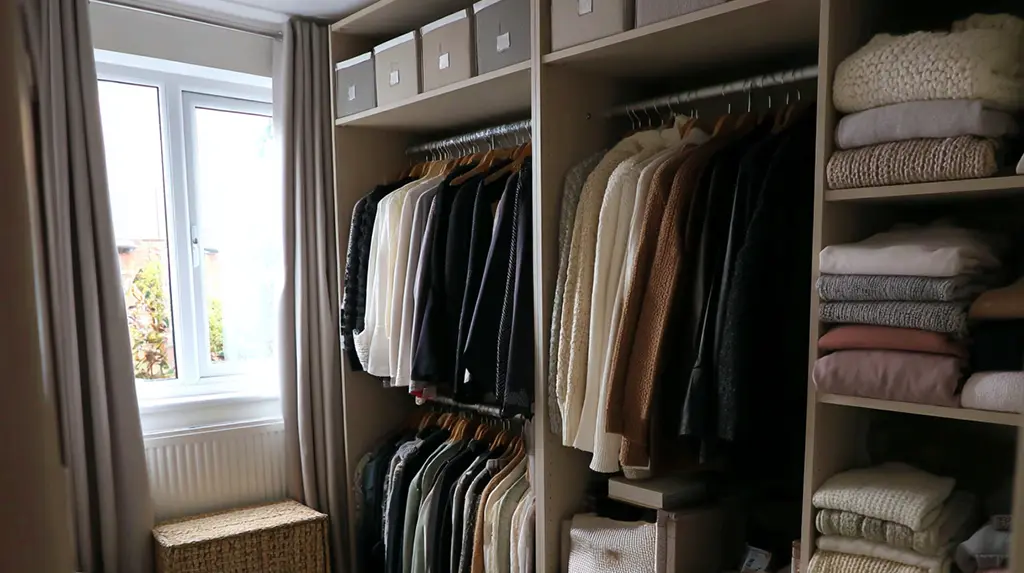
Overhead shelving
This is where off-season clothes go. High shelves — above the hanging rails — are perfect for packing winter coats, knitwear, and bulky scarves in summer. In winter, switch them out for sun hats and swimwear. Use labelled boxes or soft zip bags to keep things tidy.
Double hanging rails
A split rail setup lets you dedicate one rail to now, and one to later. During summer, you can push heavy coats and long items to the back rail or lower rail. When the weather turns, just swap them over.
Drawer zoning
Use drawer dividers to keep seasonal items separate. For example, T-shirts and shorts upfront, thermal layers tucked behind. It’s a small touch but makes the daily rummage quicker.
Shelf depth
The depth of wardrobe shelves matters here. Deeper shelves can hold folded winter items without toppling over. Shallow ones are better for lighter summer pieces. Don’t mix them up. Shelves that are too deep for small items lead to clutter.
Mirrored panels
These don’t affect storage, but they help reflect natural light. That’s a bonus when your wardrobe grows darker with bulky winter items inside.
Real-World Examples That Show It Works
One client in Douglas asked for a fitted wardrobe that could store off-season bedding and all their winter clothes — but didn’t want attic access. We fitted a full-length top box section above the sliding wardrobe. During warmer months, heavy duvets and coats are zipped into breathable bags and stored above eye level. In October, it all comes back down.
Another client had a small bedroom with no extra closet space. We added one narrow full-height shelving tower beside their slide robes, with adjustable shelves. Summer gear goes up top in winter, and vice versa. It’s a one-minute switch every few months — no extra furniture needed.
This kind of system works best when planned from the start, but even existing wardrobes can be adapted with shelf inserts or drawer boxes.
Keep It Simple, and Stick With It
Don’t overcomplicate it. Seasonal storage only works if it’s easy to stick with.
Here’s how to make that happen:
- Label everything. Use soft bags or low bins that slide in and out easily.
- Don’t pack shelves too tightly — leave a bit of space for airflow.
- Use the same shelf or zone every time. That way, the habit sticks.
- Fold, don’t hang, where possible. You’ll fit more.
- Don’t hide things too well — or you’ll forget where they went.
It’s not about squeezing more stuff in. It’s about making the same space work harder, with less effort.And if you’re planning a wardrobe now, ask your fitter to build in that seasonal split. A few small layout changes can save you hours every year.
Ready to transform your space? Let’s get started.